Sign up 24
hours a day

Keep your
insurance low

Get instant updates
on your case

Skip going
to court

For most drivers, a DWI is a legal problem. For you, it is your livelihood.

A commercial driver arrested for DWI is facing something a regular driver is not. Federal law sets the consequences for your commercial license, Louisiana courts cannot soften them, and the deferred sentence that keeps a first offense off an ordinary driver’s record does not work the same way for you. Federal regulation specifically prohibits it.

That changes the entire strategy. For a CDL holder, the goal is not managing a conviction. It is avoiding one.

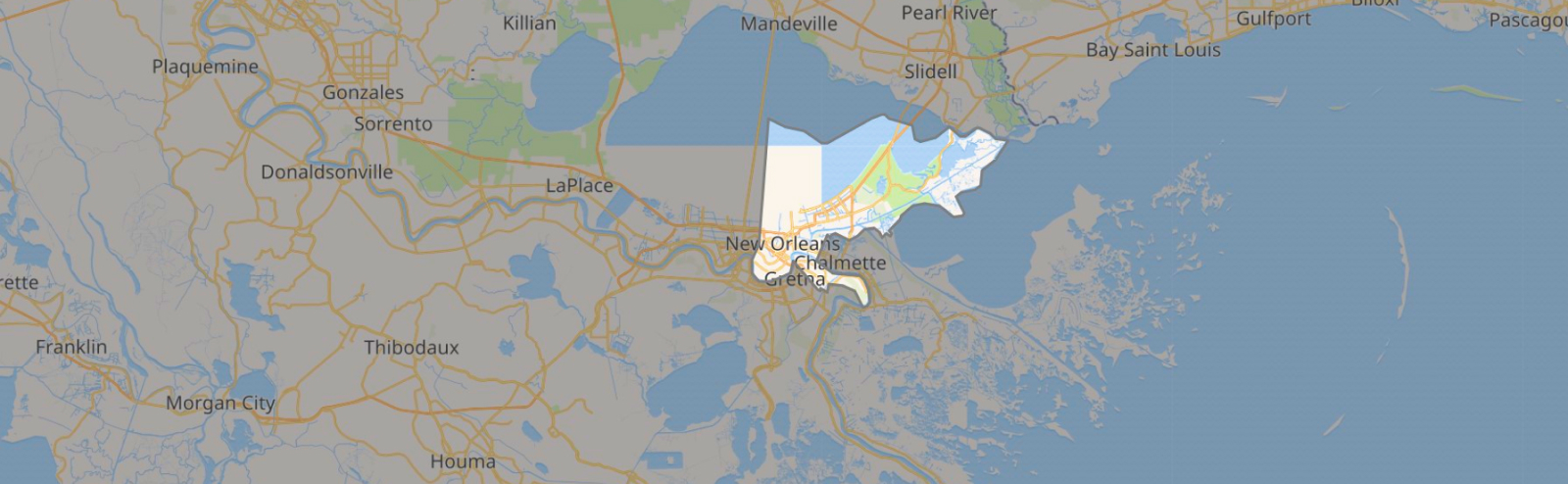
The Law Office of Heather C. Ford defends commercial drivers charged with DWI in New Orleans and across Louisiana.

Why Is a DWI Worse for a CDL Holder?

Three reasons, and each one compounds the others.

Your limit is lower. While operating a commercial motor vehicle, the threshold is 0.04 percent, half the 0.08 percent that applies to everyone else. Two drinks can put a professional driver over a line that a regular driver clears comfortably.

Your personal vehicle counts. This is the part that blindsides people. A DWI conviction in your own car, on your own time, still triggers CDL disqualification under federal rules. There is no off-duty exemption.

The state cannot help you. Federal disqualification periods under 49 CFR 383.51 are floors, not suggestions. Louisiana has no authority to shorten them or waive them as a favor.

How Long Is a CDL Disqualified After a DWI?

Federal law treats impaired driving as a major offense. The disqualification periods are:

  • First major offense, one year. This applies to a DWI conviction in any vehicle, or operating a commercial vehicle with a BAC of 0.04 percent or more.
  • First major offense while operating a placarded hazardous materials vehicle, three years.
  • Second major offense, lifetime disqualification. Reinstatement after ten years is possible only if the state offers a qualifying program.

The lookback for that lifetime consequence is unforgiving. There is no ten-year window like Louisiana uses for its own DWI counting. A conviction from decades ago can combine with a new one to end your commercial career permanently.

Refusing the chemical test does not protect you. For federal CDL purposes, a refusal is treated as a major offense, carrying the same disqualification as a conviction.

Can a CDL Holder Get a DWI Deferred or Diverted?

No, and this is the single most important thing to understand about your case.

Federal regulation 49 CFR 384.226 prohibits masking. States must not mask, defer imposition of judgment, or allow a CDL holder into a diversion program that would keep a conviction from appearing on the commercial driving record. That applies to violations in any type of vehicle, commercial or personal.

In practical terms, the tool that helps ordinary first offenders does not help you the same way. A Louisiana court can defer sentence under Code of Criminal Procedure article 894 for a regular driver and later set the conviction aside. For a CDL holder, that route cannot be used to hide the conviction from the commercial record. Federal law also defines conviction broadly, reaching guilty pleas, no contest pleas, bond forfeitures, and even payment of a fine.

Here is what the masking rule does not prohibit. It does not bar honest plea negotiation supported by the facts, and it does not bar an outright dismissal. If the evidence genuinely supports a different and lesser charge, that negotiation remains available. If the state’s case has a defect, dismissal remains available.

The difference is meaningful. A resolution that hides a DWI conviction is off the table. A resolution where there is no DWI conviction to begin with is not.

What Happens to Your Job While the Case Is Pending?

Timelines here are short, and they are separate from your court dates.

  • Under federal rules, a CDL holder generally must notify their employer of a traffic conviction within 30 days, in any vehicle.
  • Notice of a license suspension, revocation, or disqualification is due to the employer even faster, generally by the end of the next business day.
  • Your motor carrier will see the disqualification through the Commercial Driver’s License Information System, which lets states share conviction data across state lines. An out-of-state conviction still reaches your Louisiana record.
  • Drug and alcohol program violations are reported to the FMCSA Clearinghouse, which employers must query, and a prohibited status blocks safety-sensitive work until the return-to-duty process is complete.

We routinely help drivers understand what they must report and when, because a missed notification can create a second problem on top of the first.

Your Louisiana License Is a Separate Fight

Federal rules govern your commercial privilege. Louisiana governs your underlying license, and that case has its own deadline.

Under Revised Statute 32:667, the officer seized your license at arrest and issued a temporary receipt. You have 30 days from the date of arrest to submit a written request for an administrative hearing with the Department of Public Safety and Corrections. Requesting it extends your temporary driving privileges until the administrative proceedings conclude.

Two things every commercial driver should know. First, you cannot hold a CDL while your base driver’s license is suspended or revoked, so the state case directly affects your commercial status. Second, an interlock-restricted license does not restore commercial driving privileges. Restricted driving and commercial driving are not the same thing.

What Louisiana Penalties Also Apply?

The criminal case proceeds like any other DWI. A first offense under Revised Statute 14:98.1 carries a $300 to $1,000 fine and 10 days to 6 months in jail, with 48 hours unsuspendable or 32 hours of community service if probation is granted. Higher BAC readings raise the mandatory minimums and extend the suspension to two years.

So a commercial driver faces the state penalties every other driver faces, plus a federal disqualification the court has no power to prevent.

What Happens After the Disqualification Period Ends?

Getting back to work is not automatic, and drivers are often surprised by the steps involved.

  • Your underlying Louisiana license has to be valid first. You cannot hold a CDL while your base license is suspended or revoked, so state reinstatement comes before commercial reinstatement, including any reinstatement fees and interlock requirements that apply.
  • Depending on how long the downgrade lasted, retesting can be required, which may mean the knowledge and skills exams again.
  • If the case involved a drug or alcohol program violation, the FMCSA Clearinghouse return-to-duty process must be completed before you can perform safety-sensitive work. Employers are required to query the Clearinghouse, so a prohibited status blocks hiring.
  • Your medical certification has to be current.
  • Carriers and their insurers set their own hiring standards, and some will not hire a driver with a major offense for a period of years even after federal eligibility returns.

This is the practical reason to fight the underlying charge rather than accept a disqualification and plan to wait it out. The federal clock is only part of the delay.

How CDL DWI Cases Are Defended

Because the acceptable outcomes are narrower, the defense has to be more aggressive from day one.

We examine:

  • The lawfulness of the stop. Commercial vehicles are subject to certain inspections, but an impaired driving investigation still needs proper justification.
  • The reason for the DWI investigation. What specific observations moved this from a stop to an arrest?
  • The breath instrument. Maintenance records, calibration history, and operator certification are all documented and all challengeable.
  • Blood evidence. Collection procedure, storage conditions, and chain of custody.
  • Field sobriety testing. These tests have standardized procedures. Officers frequently deviate. Fatigue after long hours, cab vibration, footwear, and the shoulder of a highway all affect performance.
  • The video. Body and dash camera footage often contradicts the written report.
  • Whether the vehicle was a commercial motor vehicle under the applicable definitions, and whether hazmat placarding actually applied, since that determines whether the one-year or three-year disqualification is in play.

Where Will a New Orleans CDL DWI Case Be Heard?

Misdemeanor DWI charges in New Orleans are generally handled in the Municipal and Traffic Court of New Orleans on South Broad Street, prosecuted by the City Attorney when the charge is municipal. Felony DWI cases, third offense and above or cases involving serious injury, go to Orleans Parish Criminal District Court at 2700 Tulane Avenue.

Look at your charging document. A Louisiana Revised Statute citation means a state charge. A Municipal Code citation means a city charge. For a commercial driver, either one can reach your CDL.

What to Do Now

  1. Calendar the 30-day administrative hearing deadline immediately.
  2. Tell your lawyer you hold a CDL at the very first conversation, before any court appearance.
  3. Do not plead to anything, including what looks like a favorable deferred deal, until someone has analyzed the federal consequences.
  4. Find out what your employer notification obligations are and when they run.
  5. Preserve your logs, dispatch records, and medical certificate.
  6. Do not discuss the arrest with your employer’s insurer or investigators before getting advice.

Talk to a New Orleans CDL DWI Lawyer Today

Your CDL is not just a license. It is the reason you can pay your mortgage. A resolution that would be perfectly reasonable for another driver can be the wrong move for you, and by the time the federal consequence shows up, the plea is already entered.

If you hold a commercial license and were arrested for DWI in New Orleans, contact the Law Office of Heather C. Ford before your first court date. We will explain what your license is actually exposed to and what outcomes protect it.

Show More
Show Less

Charged With a DWI as a CDL Holder In New Orleans?

Protect Your Commercial License and Your Career.

Practice Areas

400+

Five-star Google reviews

Ben Byers

“I have referred her to everyone and I highly recommend her!”

Between myself and my family, we keep Heather busy! She is very professional and knowledgeable. I have spent a lot of money and ruined my driving record paying off speeding tickets but when I found Heather, I found that she is the best


Ben Byers
Dan P

“As a parent that has a young adult in college I will keep the "trafficticketlady" on speed dial.”

My experience with the Law Office of Heather C. Ford was outstanding. I would recommend this team to anyone that has received a traffic ticket in the metro New Orleans area....

Dan P
Noman Khan

“I am really pleased with Heather Ford's services.”

I found Heather online after searching for a traffic lawyer. Since I am not from the area, I was not 100% sure but went with my gut after reading the positive comments. And I was right! I am really pleased with Heather Ford's...

Noman Khan
Kimberly

“I will definitely use her again if need be!”

I was thrilled when Heather was able to get my ticket reduced to a non-moving violation and the judge waived fees. I never thought that was possible. I was certain I'd have to pay something. She's great...

Kimberly
Bryan Ladnier

“Ms. Ford is all that I could ask for in an advocate.”

Ms. Ford is all that I could ask for in an advocate.
My experience has been as pleasurable as can be expected when you need a lawyer.

Bryan Ladnier
Call 504-535-5239 Text Your Speeding Ticket

FAQ

Yes. Federal rules disqualify a CDL holder for a DWI conviction in any vehicle, including your personal one.

0.04 percent while operating a commercial motor vehicle, half the general 0.08 percent limit.

No. Federal regulation 49 CFR 384.226 prohibits states from masking, deferring, or diverting to keep a CDL holder’s conviction off the commercial record.

One year for a first major offense, or three years if you were operating a placarded hazardous materials vehicle. A second major offense carries a lifetime disqualification.

No. A refusal is treated as a major offense for federal CDL purposes, with the same disqualification as a conviction.

A restricted or interlock license addresses personal driving. It does not restore commercial driving privileges.

Recent Blog Posts

Click below to learn more about your specific Parish

Serving NOLA, Shreveport, Luling & Beyond…

Serving NOLA, Shreveport, Luling & Beyond…